


In today’s world, keeping your online data safe is very important. Online threats and data breaches are common. That’s why using a VPN provider is key. They have advanced features and care about your privacy.
PCMag says Proton VPN is a top choice. It has a five-star rating and an Editors’ Choice award. Using a good VPN service keeps your online activities safe and secure.
Key Takeaways
- Top-rated VPN providers offer advanced security features and strong user privacy commitments.
- Proton VPN is a highly-regarded option, with a five-star rating and Editors’ Choice award.
- Using a VPN service can significantly enhance your online security and browsing experience.
- Reputable VPN services provide a secure way to browse the internet and protect your data.
- Choosing the right VPN service is critical for the best online protection.
What is a VPN and How Does it Work?
A Virtual Private Network, or VPN, keeps your online life safe. It makes a secure link between your device and a VPN server. This link protects your data from harm.
Definition of a VPN
A VPN makes your internet safe by encrypting it. This means hackers can’t get your data. It’s very important when using public Wi-Fi.
Key components of a VPN include:
- Encryption protocols to secure your data
- A network of servers to connect to
- A user-friendly interface for easy connection
How VPNs Encrypt Your Data
VPNs use special encryption to keep your data safe. When you use a VPN, your internet goes through a secure tunnel. This makes your data safe and hides your IP address.
The encryption process involves:
- Your device connects to the VPN server
- The VPN server checks if you’re who you say you are
- An encrypted tunnel is made for your data to travel through
Benefits of Using a VPN
VPNs have many good points. They make your internet safer, keep your data private, and let you see content from other places. They keep you safe from bad people and spies.
| Benefit | Description |
|---|---|
| Enhanced Security | Protects your data from hackers and cyber threats |
| Privacy | Masks your IP address and online activities |
| Access to Geo-Restricted Content | Allows you to access content from other regions |
Why You Need VPN Services in the U.S.
In today’s world, having the best VPN service is key to keeping your online life safe in the U.S. With more cyber threats and data breaches, it’s vital to protect your online identity.
Protecting Your Privacy Online
Using a VPN helps keep your online life private. It encrypts your internet traffic, keeping your activities safe. This is very important when using public Wi-Fi, as hackers often target it. With a VPN subscription, you can surf the web safely, knowing your data is safe.
Bypassing Geo-Restrictions
Another great thing about VPNs is they let you get past geo-blocks. Many streaming services and websites are not available in some areas. By using a VPN, you can hide your IP address and access content you can’t normally see. This makes an affordable VPN a smart choice for streaming fans.
Enhancing Security on Public Wi-Fi
Public Wi-Fi is a hotspot for cybercrime. When you use public Wi-Fi, you risk being hacked. A VPN encrypts your data, making it unreadable to hackers. So, a reliable VPN service keeps you safe online, even on public Wi-Fi.
In short, having a VPN service is now a must in our digital world. It helps protect your privacy, get past geo-blocks, and keep you safe on public Wi-Fi. A VPN gives you the tools to stay safe online.
Top Features to Look for in VPN Services
When picking a VPN service, look for key features. These ensure your online safety and privacy. A good VPN has strong security, is easy to use, and has great customer support.
Strong Encryption Protocols
A secure VPN uses strong encryption to protect your data. Look for AES-256 encryption, the top choice. PCMag says Proton VPN and NordVPN are great for this.
No-Log Policies
A no-log policy keeps your online activities private. VPNs with this policy don’t store your data. Make sure the VPN you choose has a strict no-log policy.
Speed and Reliability
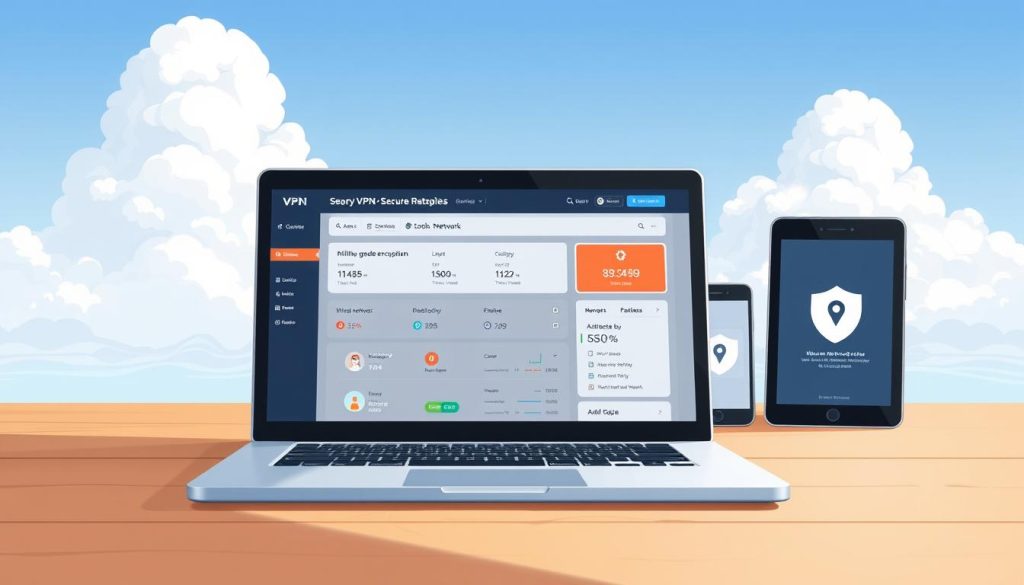
VPNs can slow down your internet. Choose a VPN with many servers to keep speeds high. Wired’s Best VPN guide lists fast and reliable VPNs.
Customer Support
Good customer support is key for solving VPN issues. Look for 24/7 customer support via live chat, email, or phone.
When comparing VPN services, remember these important features:
- Strong encryption protocols
- No-log policies
- Speed and reliability
- Customer support
By focusing on these features, you can find a VPN that fits your needs for security, privacy, and speed.
Comparing Paid vs. Free VPN Services
It’s important to know the difference between free and paid VPN services. This helps you choose the right one for your online safety. You have two main options: free or paid VPNs.
Limitations of Free VPNs
Free VPNs have some big downsides. They often have data limits and fewer server locations. This can make your internet slow. Also, free VPNs might not keep your data safe like paid ones do.
Some big problems with free VPNs are:
- Data caps and limited bandwidth
- Fewer server locations
- Potential security risks due to weaker encryption
- Limited customer support
A study compared free and paid VPNs. It found free ones lack strong security features.
Benefits of Choosing Paid Services
Paid VPNs have many good points. They use stronger encryption, have more server locations, and offer better support.
Here are some good things about paid VPNs:
- Stronger encryption for better security
- More server locations for faster speeds
- No data caps or bandwidth limits
- 24/7 customer support
Let’s look at a comparison table:
| Feature | Free VPNs | Paid VPNs |
|---|---|---|
| Data Caps | Yes | No |
| Server Locations | Limited | Extensive |
| Encryption Strength | Weaker | Stronger |
| Customer Support | Limited | 24/7 Support |
Experts say, “the best VPN services are those that balance security, speed, and cost”. Think about what you need when picking a VPN.
Free VPNs might seem good because they’re free. But paid VPNs give you better protection and features. They’re a smart choice for serious online security.
Best VPN Services in 2025
The year 2025 brings new VPN tech. It’s important to find the top VPN services for you. With many choices, picking the best VPN can be hard. But, looking at the top VPNs’ features helps you choose wisely.
Overview of Leading VPN Providers
PCMag says Proton VPN, NordVPN, and ExpressVPN are the best in 2025. They are known for strong encryption, no-log policies, and great customer support. For example, top VPN services like Proton VPN keep your data safe from hackers.
Proton VPN focuses on keeping your data safe and private. It has many servers worldwide, so you can always find a good connection. NordVPN is loved for its easy-to-use interface and lots of servers, making it great for everyone.
Key Features Comparison
When we compare VPNs, some features are key. These are encryption, server locations, and customer support. Here’s a quick look:
- Encryption Protocols: Proton VPN uses AES-256 encryption. NordVPN and ExpressVPN also have strong encryption.
- Server Locations: ExpressVPN has servers in over 90 countries. NordVPN has servers in more than 60 countries.
- Customer Support: All three VPNs have 24/7 support. NordVPN and ExpressVPN also have live chat and FAQs.
By looking at these features, you can find the VPN that fits your needs. Whether you want the best security, speed, or support, there’s a VPN for you.
How to Set Up a VPN on Your Devices
Setting up a VPN is easy and makes your online activities safer. Most VPN services have apps and guides to help you start.
Step-by-Step Installation Guide
To set up a VPN, just follow these steps:
- Choose a VPN Service: Pick a trusted VPN that fits your needs.
- Download the VPN App: Visit the VPN’s website and download the app for your device.
- Install the VPN App: Follow the app’s installation guide.
- Create an Account: Sign up for the VPN if you haven’t yet.
- Log In: Open the app and log in with your details.
- Connect to a Server: Pick a server and click ‘Connect’ to secure your connection.
These steps will help you set up a VPN on your devices. Then, you can browse safely.
Configuring VPN Settings for Optimal Performance
After setting up your VPN, tweak the settings for better performance. Here’s how:
- Protocol Selection: Pick the right protocol (like OpenVPN or WireGuard) for speed and security.
- Server Location: Choose a server near you for faster speeds.
- Kill Switch: Turn on the kill switch to protect your data if the VPN drops.
- Split Tunneling: Set up split tunneling to choose which apps use the VPN and which don’t.
Adjusting these settings can make your VPN better. It ensures you get the most from your service.
By following this guide, you’ll have your VPN set up right. It will give you a Secure VPN connection.
Common Myths About VPN Usage
There’s a lot of wrong information about VPNs. It’s time to correct it. Virtual Private Networks, or VPNs, are getting more popular. People use them to keep their online activities safe and private. But, many myths stop people from using them.
Debunking VPN Misconceptions
One myth says VPNs are only for tech experts. But, most VPNs are easy to use. They have simple apps that make connecting easy. You can find a VPN service review that shows which ones are easy to use.
Another myth is that VPNs slow down your internet. It’s true that they can slow it a bit because of encryption. But, many VPNs have fast servers to keep your speed good. Some VPNs even make your internet faster by avoiding ISP slowdowns.
Understanding the Legal Aspects
Using a VPN is legal in most places. But, some countries have rules about VPNs. It’s important to know the laws where you live. For example, in the United States, using a VPN is legal and helps with security.
Here’s a quick look at VPN laws in different places:
| Region | VPN Legality | Key Considerations |
|---|---|---|
| United States | Legal | Commonly used for security and privacy |
| China | Restricted | Requires approval from the government |
| European Union | Legal | Must comply with GDPR regulations |
When picking a VPN, think about encryption protocols, no-log policies, and customer support. A good VPN comparison can help you find the right one. Look for strong security and reliable connections.
In short, knowing the truth about VPNs helps you make smart choices online. By clearing up myths and knowing the law, you can pick a VPN that keeps you safe and private.
Frequently Asked Questions About VPNs
Understanding VPNs can be tough, but we’re here to help. You might wonder about picking the right service or using it for streaming. Or you might ask what happens if it fails.
How Do I Choose the Right VPN?
Choosing the right VPN is about your needs and what you like. Look for strong encryption protocols, no-log policies, and reliable customer support. Also, read VPN service reviews to see what others say.
| Feature | VPN Service A | VPN Service B |
|---|---|---|
| Encryption Protocol | AES-256 | AES-256 |
| No-Log Policy | Yes | Yes |
| Customer Support | 24/7 Live Chat | Email Support |
Can I Use a VPN for Streaming?
Yes, you can use a VPN for streaming. Many VPNs help you get past geo-restrictions. This lets you watch content from all over. Just pick a VPN known for streaming and has good servers for it.
What Happens if My VPN Fails?
If your VPN fails, your internet might not be safe. To avoid this, find VPNs with a kill switch. This feature cuts off your internet if the VPN goes down. It keeps your data safe, even when the VPN fails.
Knowing these key VPN facts helps you make smart choices. Whether you’re looking at VPN services or thinking about a VPN subscription, knowing the good and bad is key.
Tips for Optimizing Your VPN Experience
To make your VPN better, follow a few steps. This will help keep your online activities safe and fast. Here’s how to make sure your VPN works well and gives you a great online experience.
Choosing the Right Server Location
Picking the right server location is key for a smooth VPN use. Connecting to a server near you usually means faster speeds. But, if you want to see content blocked in other places, you might need a server there.
- Choose servers that are less crowded for better performance.
- Think about the server’s location based on what you need, like accessing certain content.
- Some VPNs have special servers for things like streaming or torrenting.
Knowing When to Disconnect
Even with a VPN, there are times to turn it off. For example, if speeds are slow or you’re using local services that don’t need a VPN.
- Turn off your VPN when using local services that might block it.
- Turn off your VPN when not using the internet to save resources.
- Some VPNs can turn off automatically when you’re on a safe network.
To make your VPN even better, check out this table. It shows important VPN features and what they do:
| VPN Feature | Description | Benefit |
|---|---|---|
| Kill Switch | Turns off your internet if the VPN connection fails. | Keeps your data safe. |
| Split Tunneling | Let’s you pick which apps use the VPN. | Helps use your bandwidth better. |
| Multi-Hop | Sends your data through more than one VPN server. | Makes you even more private. |
By using these features, you can make your VPN experience better. This means you’ll have a secure and efficient time online.
The Future of VPN Technology
When picking the best VPN, look at new trends. The VPN world is changing fast. New tech like artificial intelligence and machine learning are making VPNs better and safer.
Advancements in VPN Services
Top VPNs are using new tech like SD-WAN and x86 systems. They also use Zero Trust and SASE for better security. Learn more about these changes at The Future of VPN Technology.
Enhanced Cybersecurity
When choosing a VPN, think about its security features. Look for strong encryption and ‘least-privilege’ access. These help keep your online world safe from threats.
FAQ
What is a VPN and how does it work?
A VPN, or Virtual Private Network, makes a safe and secret link between your device and a VPN server. This link makes your internet traffic safe. It stops hackers and others from getting your data.
Why do I need a VPN service in the U.S.?
In the U.S., you need a VPN to keep your online self safe. It helps you get past geo-blocks and keeps you safe on public Wi-Fi. A VPN keeps your data safe from hackers and others.
What are the top features to look for in VPN services?
Look for strong encryption, no-log policies, and good speed and reliability in VPN services. A good VPN also has great customer support. This helps keep your data safe and solves any problems you might have.
What is the difference between paid and free VPN services?
Paid VPNs have more features, better speed, and more security than free ones. Free VPNs might have limits like data caps and fewer servers. They also might not be as safe.
Can I use a VPN for streaming?
Yes, you can use a VPN for streaming. Many VPNs work well with streaming sites. They let you watch content from other places and keep your streaming safe.
What happens if my VPN fails?
If your VPN fails, your data might not be safe. Choose a VPN with a kill switch. This feature cuts off your internet if the VPN stops working.
How do I choose the right VPN for my needs?
To pick the right VPN, think about what you do online and how safe you need to be. Look at different VPNs and their features, prices, and support. This helps you find the best one for you.
Are VPN services legal to use?
Yes, using VPNs is usually legal. But, you should know the laws in your area. Using a VPN for bad things is illegal. So, always use it responsibly.
How do I optimize my VPN experience?
To get the most from your VPN, pick the right server and set up your VPN for the best speed. Know when to turn off your VPN. These tips help your VPN work well and keep you safe online.